In the hyper-connected digital economy of 2026, website speed is no longer a competitive advantage; it is a mission-critical requirement. For enterprise-level organizations, SaaS platforms, and high-volume eCommerce operations, a sluggish WordPress site is a direct pathway to revenue loss, diminished SEO authority, and a fractured user experience.
Google’s algorithms, now more sophisticated and data-driven than ever, penalize any digital infrastructure that fails to meet the stringent demands of Core Web Vitals (CWV). The question is no longer “can we be faster?” but “how can we achieve sub-second performance and maintain algorithmic dominance?“
At WordPressDepartment.com, we engineer Technical Sovereignty. This long-form guide provides the enterprise-grade blueprint for WordPress speed optimization in 2026, transforming your platform into a high-velocity growth engine.
1. The 2026 Digital Imperative: Why Speed Defines Your Enterprise Edge
The consequences of a slow WordPress site extend far beyond anecdotal user frustration. For a modern enterprise, latency is a measurable erosion of Digital ROI.
The Algorithmic Tax on Sluggishness:
- Google’s Core Web Vitals (CWV): CWV metrics are now non-negotiable ranking factors. Failing to optimize your Largest Contentful Paint (LCP), Interaction to Next Paint (INP), and Cumulative Layout Shift (CLS) means immediate algorithmic demotion. As highlighted by web.dev/vitals/, these are user-centric metrics directly impacting search visibility.
- Conversion Rate Erosion: Every second of delay in page load can reduce conversion rates by an average of 4.42% (source: Portent). For high-volume transactional sites, this translates to millions in lost revenue.
- Brand Authority Degradation: In an age of instant gratification, a slow site signals technical incompetence, eroding trust and positioning your brand as a “legacy liability.”
2. The Foundation: Enterprise-Grade Performance Audit
Before any optimization, a Technical WordPress Performance Audit is paramount. This isn’t about running a generic online tool; it’s a deep-dive forensic analysis of your entire digital infrastructure.
Our Data-Driven Audit Methodology:
- Server-Side Execution Profiling: Analyzing server response times, PHP execution, and database query efficiency.
- Network Latency Mapping: Identifying bottlenecks in CDN delivery and DNS resolution.
- Third-Party Script Validation: Auditing external tracking codes and advertising scripts for performance impact.
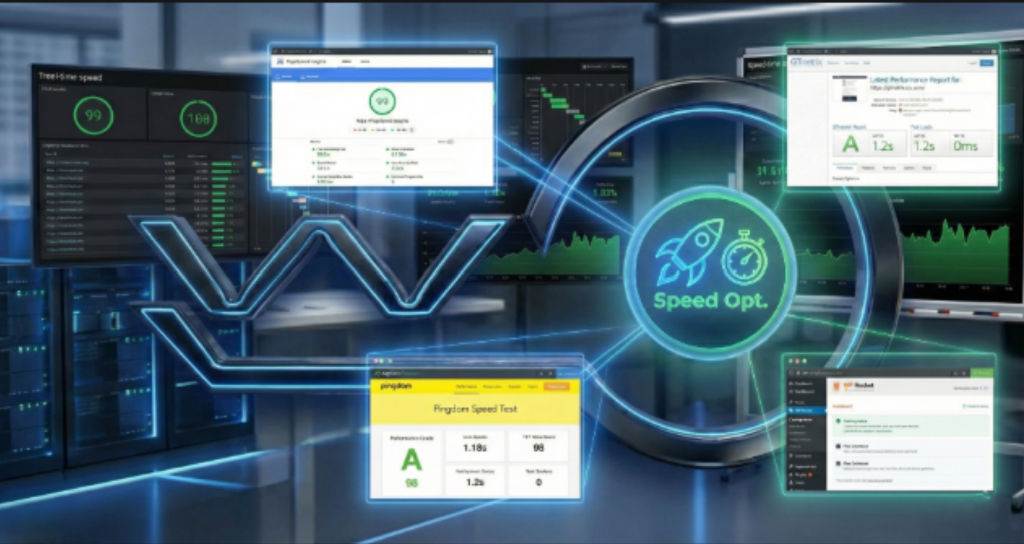
This digitally enhanced audit provides an Executive Overview, detailing specific, actionable strategies for achieving optimal WordPress Core Web Vitals Optimization.
3. Architectural Pillars of Speed: Beyond Traditional Optimization
For enterprise-grade WordPress, traditional “quick fixes” are insufficient. We implement revolutionary breakthroughs in architecture.
a. Headless WordPress: The Apex of Speed & Security
The ultimate solution for sub-second load times and enhanced security is Headless WordPress Development. By decoupling the backend (WordPress for content management) from a modern frontend (e.g., React, Next.js, Vue.js), we achieve:
- Instantaneous UX: Content is served as static or pre-rendered files, drastically reducing server load and rendering times.
- Fortified Security: The core WordPress database is no longer directly exposed, minimizing the attack surface.
- Scalable Infrastructure: The frontend can be hosted on a global CDN, delivering content at the edge with unparalleled speed.
HTML
/**
 * Enable Persistent Object Caching for Enterprise Performance
 */
define( 'WP_CACHE', true );
define( 'WP_REDIS_HOST', '127.0.0.1' );
define( 'WP_REDIS_PORT', 6379 );
define( 'WP_REDIS_TIMEOUT', 1 );
define( 'WP_REDIS_READ_TIMEOUT', 1 );
b. Cloud-Native Hosting & CDN Integration
Your hosting environment is the foundation. We recommend cloud-native platforms optimized for WordPress, featuring:
- Elastic Scalability: Resources that dynamically adjust to traffic spikes.
- Global CDN Integration: Utilizing a Content Delivery Network (CDN) like Cloudflare or Akamai to cache content at edge locations worldwide, drastically reducing latency for global users.
HTML
<img src="https://yourcdn.com/images/optimized-hero.webp"
     alt="Optimized Hero Image"
     loading="lazy">
4. Advanced Algorithmic Optimization: Fine-Tuning the Engine
Once the architecture is sound, algorithmic optimization fine-tunes every component for peak performance.
a. Database Optimization & Query Efficiency
A bloated database is a slow database. We perform database optimization by:
- Purging Transients & Revisions: Removing old plugin data, post revisions, and orphaned metadata.
- Indexing & Query Refinement: Optimizing SQL queries for faster data retrieval, especially critical for Custom WordPress Solutions with complex data models.
PHP
// Example: Disabling Post Revisions for a cleaner database
define('WP_POST_REVISIONS', 3); // Keep only 3 revisions per post
b. Asset Delivery & Image Optimization
- Next-Gen Image Formats: Converting images to WebP or AVIF formats for superior compression without quality loss.
- Lazy Loading: Implementing native lazy loading for images and iframes to defer off-screen content.
- Critical CSS & JS Deferral: Delivering only essential CSS for the initial viewport and deferring non-critical JavaScript.
HTML
<img src="/path/to/image.jpg" alt="Description" loading="lazy">
c. Code Minification & GZIP Compression
Reducing file sizes is a fundamental step.
- Minification: Removing unnecessary characters from HTML, CSS, and JavaScript without affecting functionality.
- GZIP Compression: Enabling server-level compression to reduce file transfer sizes.
5. Proactive Maintenance: Sustaining Sub-Second Speed
Speed is not a one-time fix; it is an ongoing commitment. Our WordPress Maintenance Services provide the proactive website management required to sustain peak performance.
- Continuous Core Web Vitals Monitoring: We use real-time interactive dashboards to track your CWV scores and make immediate adjustments.
- Scheduled Database Optimization: Routine cleanups prevent future bloat and ensure consistent query efficiency.
- Plugin Dependency Validation: Before any updates, we validate plugin compatibility to prevent performance regressions.
This ongoing WordPress support ensures your Website ROI optimization remains consistently high.
6. The WordPressDepartment Difference: Engineering for Digital Excellence
At WordPressDepartment.com, we are more than just developers; we are senior enterprise WordPress architects and SEO engineers. Our approach to speed optimization is:
- Holistic: Addressing every layer from server to browser.
- Data-Driven: Utilizing advanced analytics to pinpoint and eliminate bottlenecks.
- Future-Forward: Implementing API-driven and Headless WordPress Development for 2026 and beyond.
- Certified & Trusted: Our industry-leading team ensures your digital infrastructure is both secure and performant.
Your website’s speed is a direct reflection of your business’s agility. Don’t let a slow site be a legacy liability. Transform it into a high-velocity growth engine.
🚀 Ready to Unleash Sub-Second Performance?
Stop losing customers and search authority due to a slow website. Partner with the WordPressDepartment.com to engineer unparalleled speed and resilience.
Download the 2026 WordPress Speed Optimization Checklist
Optimize for Algorithmic Dominance. Get our exclusive, digitally enhanced checklist for a step-by-step guide to achieving sub-second load times and perfect Core Web Vitals.